You Can Share a Home, a Bed, and an Entire Life With Someone and Still Feel Like You’re Alone.
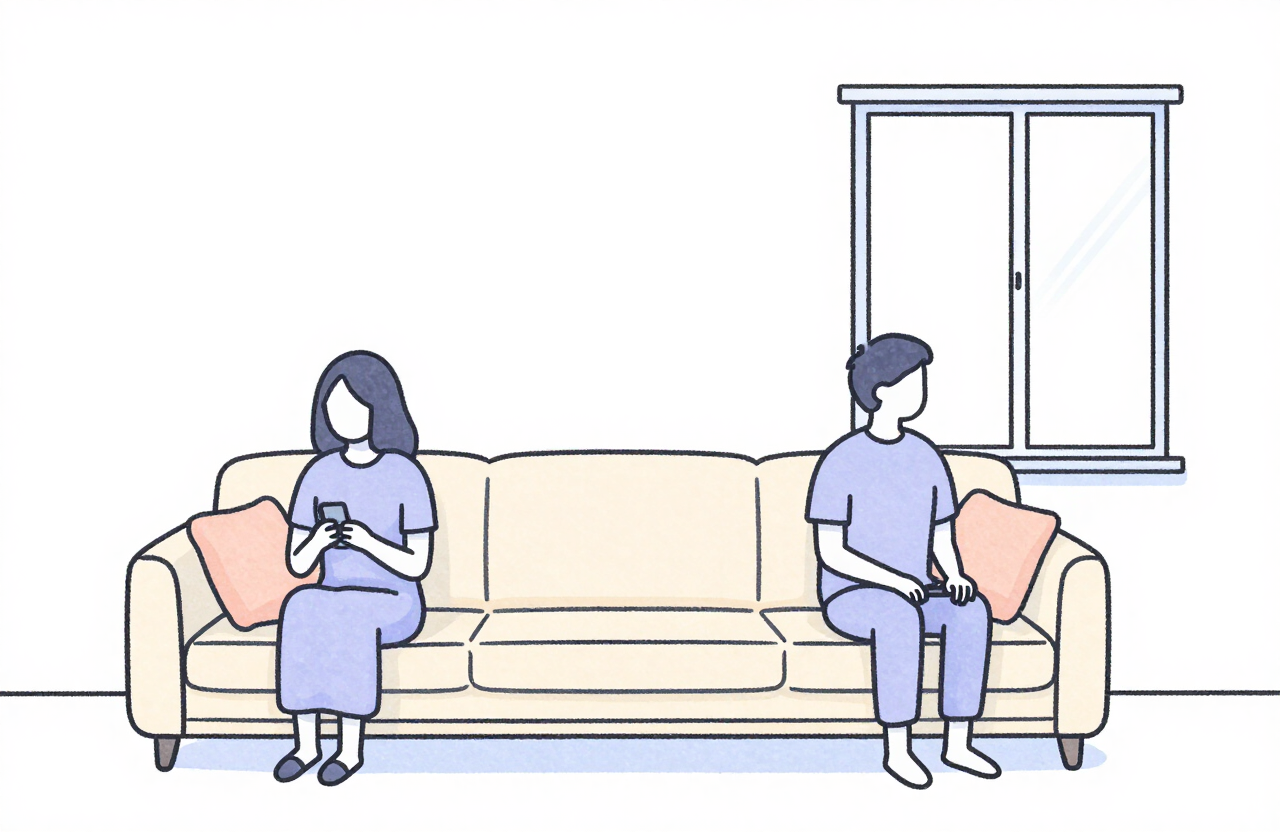
There is a particular kind of loneliness that does not come from being alone. It comes from being beside someone — sharing a home, sharing a bed, sharing the small machinery of an ordinary day — and still feeling as though you are the only person in the room. It is quieter than solitude, and in some ways it is harder, because there is no obvious absence to point to. The person is right there. And yet, somehow, they are not.
We tend to think of loneliness as a condition of being single, of having no one. But the truth is more complicated than that. Two people can sleep inches apart, eat at the same table, raise the same children, and build the same life, and one of them can still feel entirely unseen. Loneliness, it turns out, is not about proximity. It is about connection — and connection is something no shared address can guarantee.
The signs are rarely dramatic. They live in the texture of ordinary evenings. Conversations that once wandered into the small hours now end after a few exchanged sentences about groceries or schedules. Affection that once came naturally — a hand on the back, a question asked for no reason, a glance held a moment too long — thins out until it disappears. You find yourself talking and realizing, halfway through, that no one is really listening. You stop sharing the things that matter because sharing them has started to feel like speaking into a room where no one is waiting to hear.
You can spend an entire evening together — the same couch, the same screen, the same lamplight — and feel as though you have not actually been with each other at all. The hours pass, but they pass in parallel, not together. There is a difference between simply spending time in the same space and genuinely connecting with another person, and that difference is where loneliness lives. Presence without attention is its own kind of absence.
What makes this so painful is the contradiction at the center of it. You are not alone, not in any way the world would recognize. You have a partner. You have a life together. And yet there is no one to confide in — no one who wants to hear about the hard day, no one who notices the shift in your mood, no one who reaches for you, curious about what you are thinking and feeling. You carry your inner life quietly, because there is nowhere to set it down. The ache is not the ache of having no one. It is the ache of having someone who is close enough to hurt you and far enough away to miss you entirely.
It is worth being honest about why so many people stay in relationships like this. Familiarity is powerful; the shape of a shared life becomes its own kind of comfort, even when the warmth has gone out of it. There are shared responsibilities — a home, finances, children, routines woven so tightly together that pulling them apart feels unthinkable. There are memories, too, of a time when it was different, when the connection was real, and those memories keep alive the hope that things might improve. And there is the fear of starting over, which can feel heavier than the loneliness itself.
None of that is weakness. It is human to weigh what you have against what you might lose, to hope that a difficult season is only a season. And it is important to say, plainly, that not every period of emotional distance means a relationship is doomed. People go through real stretches of stress, grief, and exhaustion. The question is not whether things get hard, but whether, when they do, both people are still willing to turn toward each other.
Emotional intimacy is not a fixed thing you either have or do not. It is something two people build and rebuild, through attention, through curiosity, through the willingness to be present with each other’s inner lives. It asks for communication — not only about logistics, but about feelings, fears, and the things left unsaid. It asks for mutual effort, the kind that shows up in small, ordinary acts of interest. And it asks for emotional availability, the simple but rare willingness to let someone in.
Recognizing that your needs are going unmet is not an accusation. It is the first act of honesty. It is possible to name what is missing without deciding the relationship is over — to say, gently and clearly, that you are lonely, that you miss being known, that you want more than proximity. Sometimes that honesty opens a door, and two people begin, slowly, to find each other again. Sometimes it simply clarifies what you already knew. Either way, it returns something the silence had taken: the truth about where you actually stand.
Because here is the thing about feeling alone while sharing your life with someone: it is not the same as being alone. Being alone is an absence of company. Feeling alone in a relationship is an absence of connection — and that distinction matters. Being alone can be peaceful. Feeling alone beside someone rarely is, because you are close enough to remember what connection felt like, and far enough away to feel its loss. The loneliest feeling is not having no one beside you. It is having someone beside you who no longer reaches for who you are.
Is emotional neglect worse when you’re single or when you’re in a relationship?
Share your experience in the comments — your story may be exactly what someone else needs to read today.
Letters on Love
Thoughtful reflections on relationships, intimacy, heartbreak, emotional connection, and the experiences that shape the way we love. Join us for conversations about the complicated and beautiful side of human relationships.
By subscribing, you agree to receive emails from Your True Love. Unsubscribe anytime.
Comments
0