Sometimes, After Going So Long Without Love, You Don't Know What to Do When Someone Finally Gives It to You.
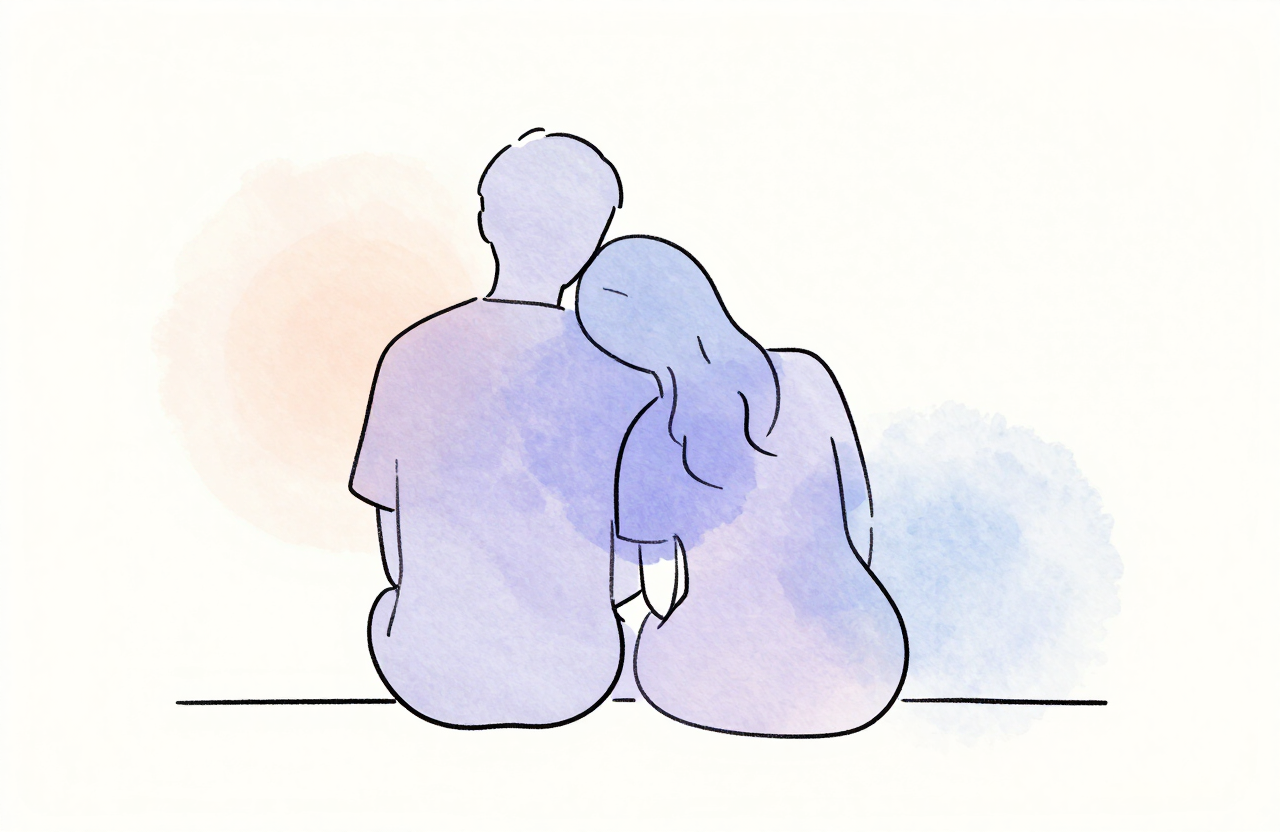
You would think that being loved would be one of the easiest things to accept. After all, isn't that what most of us want?
Yet for anyone who has spent a long stretch of time without it — without being chosen, without being held, without someone asking how your day actually went — love can arrive feeling less like a gift and more like a question you don't know how to answer.
When you go long enough without affection, you build a life around its absence. You learn to comfort yourself, to talk yourself down from bad nights, to celebrate your small wins alone in a quiet kitchen. You become, without quite noticing, your own everything. And that independence is not a failure — it is survival. It is what kept you soft in a world that felt hard.
But then someone comes along. They remember the things you said in passing. They reach for your hand without making a speech about it. They are kind, and steady, and they mean it. And instead of relief, what you feel is a strange, creeping panic — because somewhere along the way, you forgot what it feels like to be on the receiving end of tenderness.
The hardest part is not finding love. The hardest part is believing it.
When disappointment has been your most reliable companion, trust becomes a muscle you have to slowly rebuild. You catch yourself waiting for the catch, for the moment the kindness curdles into something else. You read small silences as proof that it was never real. You test, sometimes without meaning to — pulling away just to see if they'll follow, picking fights over nothing to confirm the story you've already told yourself: that people leave, that they always leave, that it's safer not to need them.
And then there is the vulnerability of it. To accept love is to let someone close enough to hurt you, and you already know what that distance costs. You know the particular ache of having opened a door and watched someone walk back through it. So you keep one foot out, even when the rest of you wants to stay. You say you're fine when you're not. You apologize for needing things. You treat your own desires as inconveniences, because for so long there was no one to inconvenience, and you got used to taking up as little space as possible.
What no one tells you about loneliness is that it teaches you to disappear. And what no one tells you about love is that it asks you, gently and repeatedly, to come back.
Learning to receive affection does not mean abandoning the strength you built. It does not mean folding yourself into someone else's life or giving up the boundaries that kept you whole. You can keep your name, your solitude, your quiet evenings, your hard-won sense of self. Healthy love does not ask you to shrink. It asks you to stop apologizing for taking up room.
It helps to go slowly. You do not have to trust all at once. You can let someone in one small door at a time — letting them bring you soup when you're sick, letting them hear about the hard day, letting them stay when every instinct says push them out. You can say, "I'm not used to this," and let that be enough of an explanation. The right person will not rush you. They will understand that your hesitation is not rejection; it is the sound of someone learning, after a long winter, that spring is allowed to last.
There will be days you get it wrong. You'll pull away from a hand that only meant to hold you. You'll mistake steadiness for boredom, peace for the calm before a storm. That's okay. Unlearning is its own kind of work, and it rarely happens in a straight line. What matters is that you notice — that you catch yourself bracing for a blow that isn't coming, and choose, just this once, to stay soft.
Because here is the thing they don't tell you about going so long without love: it doesn't make you unworthy of it. It makes you someone who has learned, the hard way, exactly what it costs. And that means when you finally let it in, you won't take it for granted. You'll hold it carefully, the way you hold anything you waited a long time to receive.
Have you ever struggled to accept love because you weren't used to receiving it?
Letters on Love
Thoughtful reflections on relationships, intimacy, heartbreak, emotional connection, and the experiences that shape the way we love. Join us for conversations about the complicated and beautiful side of human relationships.
By subscribing, you agree to receive emails from Your True Love. Unsubscribe anytime.
Comments
0