One of the Loneliest Feelings Is Watching Someone Slowly Lose Interest in You While You're Still Trying to Make Things Work.
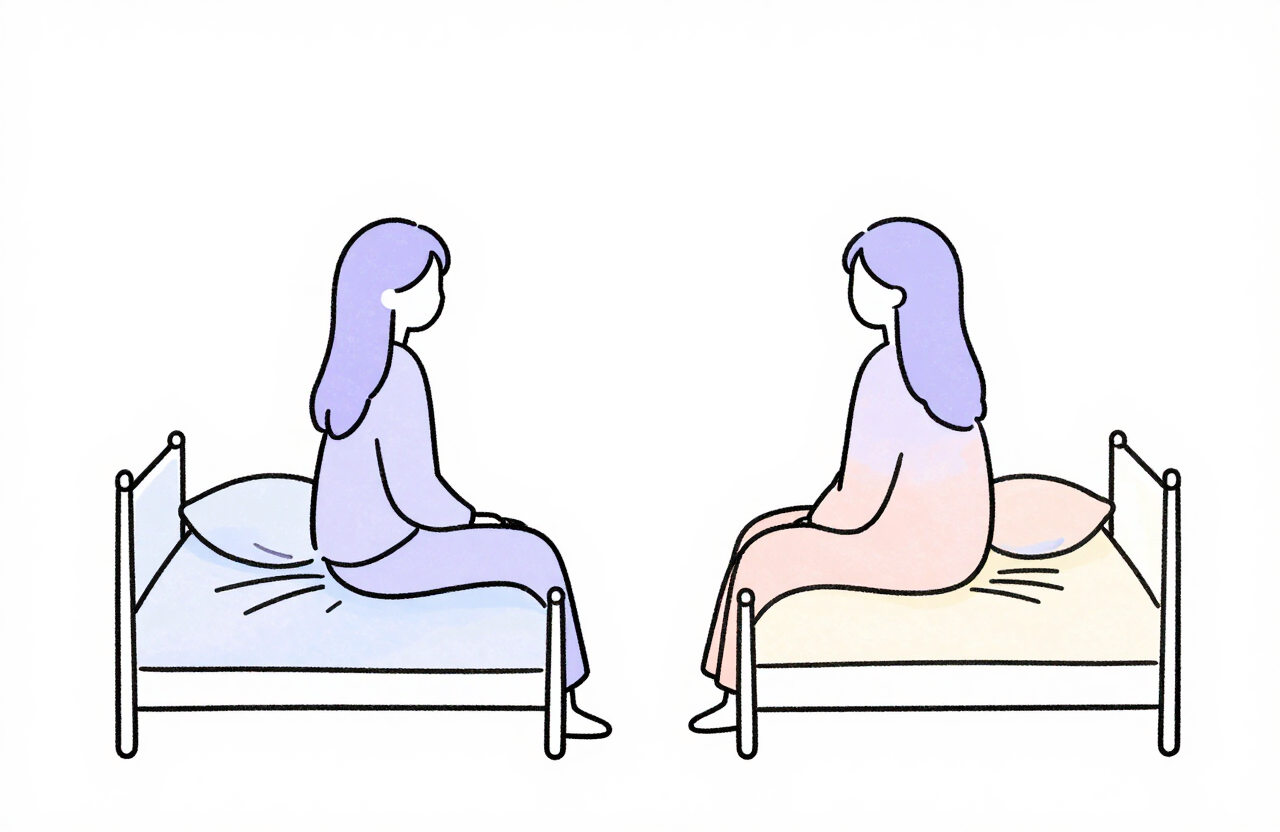
There is a particular kind of loneliness that doesn't come from being alone. It comes from being with someone — sharing a bed, a routine, a life — and still feeling as though you are the only one in the room who is still trying. It creeps in slowly, quietly, in the small gaps between what used to be and what things have become.
At first, you barely notice it. A message that used to come the moment you woke up arrives a little later in the day. A conversation that once wandered into the small hours now ends after a few exchanged lines. You tell yourself people get busy. You tell yourself this is just a phase. And maybe it is — relationships breathe, they have their tides — but there is a difference between a quiet season and a slow leaving.
The signs are rarely dramatic. They live in the texture of everyday things. Fewer messages, shorter replies, the affection that once came naturally now feeling like something you have to ask for. The small efforts that used to say "I was thinking of you" — a remembered detail, an unexpected text, a hand reached for without reason — thin out until they disappear. Intimacy, both physical and emotional, becomes something scheduled or skipped. Promises get made and then forgotten, not out of cruelty but out of a fading that no one has named.
And so you begin to compensate. You initiate the conversations. You plan the evenings. You reach across the growing distance and try, again, to close it. You become the one who asks the questions, who checks in, who brings up the things that need talking about. You make excuses for them — they're tired, they're stressed, they don't mean it — because the alternative, that they simply don't want to anymore, is too heavy to hold all at once.
What makes this so exhausting is not the effort itself. It is the asymmetry of it. Love, at its healthiest, is a back-and-forth — two people leaning toward each other, meeting somewhere in the middle. But when you are the only one leaning, you start to feel as though you are holding the whole relationship upright by yourself. You start to wonder whether wanting affection and effort is asking for too much. You start to apologize for having needs at all.
That is the quiet cruelty of a one-sided relationship: it teaches you to shrink. You lower your expectations so they stop disappointing you. You stop mentioning the things that hurt, because mentioning them changes nothing. You learn to read silence as an answer and absence as a message. And somewhere in all that adjusting, you lose track of what you actually deserve.
It is worth saying, plainly, that not every difficult stretch means a relationship is over. People go through real seasons of stress, grief, and exhaustion, and a loving partner shows up for those. The question is not whether things get hard — they will — but whether, when they do, both people are still facing the same direction. A rough period is something two people weather together. A one-sided relationship is something one person carries alone, while the other has already half-left.
Telling the difference takes honesty. It means watching what someone does, not only what they say. Words of reassurance that never turn into effort are not repair — they are delay. An apology that repeats the same pattern is not growth — it is management. Real change shows up in consistency: in the messages that start coming again, the affection that returns without being requested, the small acts that say, without fanfare, I am still here, and I still choose this.
If those things do not come, you are allowed to name what is happening. You are allowed to say, out loud, that you have been carrying more than your share. You are allowed to want a love that meets you halfway without you having to drag it there. Wanting effort is not needy. Wanting affection is not demanding. Wanting to feel chosen is not too much to ask of someone who once chose you.
Recognizing that a relationship has become one-sided is not the same as giving up on it. It is the first act of honesty — the moment you stop pretending the distance isn't there and start deciding what you are willing to live with. Sometimes that honesty opens a conversation that brings two people back together. Sometimes it simply confirms what you already knew. Either way, it returns something to you that the slow fade had taken: the truth about where you actually stand.
Because here is what no one tells you about being the one who keeps trying: it is not a sign of weakness. It is a sign that you still believe love is worth the effort. But that belief was never meant to be carried alone. It was meant to be met — by someone who, when things got quiet, still reached back across the bed and closed the distance instead of letting it grow.
At what point do you realize you're the only one still fighting for the relationship?
Share your experience in the comments — your story may be exactly what someone else needs to read today.
Letters on Love
Thoughtful reflections on relationships, intimacy, heartbreak, emotional connection, and the experiences that shape the way we love. Join us for conversations about the complicated and beautiful side of human relationships.
By subscribing, you agree to receive emails from Your True Love. Unsubscribe anytime.
Comments
0